Choosing the Right Hot Water System for Your Home: Looking Beyond the Purchase Price
Why running costs, energy choices and New Zealand's changing energy future all matter when replacing your hot water system.
Most homeowners naturally focus on the upfront price when replacing a hot water system.
It's understandable. A hot water cylinder or continuous gas system is a significant investment, and comparing quotes often starts with one simple question:
"How much does it cost?"
But at Jarvis Plumbing, we encourage our customers to ask a different question as well:
"How much will it cost me over the next 10–15 years?"
That question often leads to a very different answer.
What is a whole-of-life cost?
Whole-of-life cost (sometimes called lifecycle cost) is simply the total amount you'll spend over the life of your hot water system.
This includes:
Initial purchase and installation
Energy consumption
Maintenance and servicing
Repairs
Expected lifespan
Replacement costs
When you look at the complete picture, a system with a higher purchase price may actually cost less over its lifetime.
Your hot water system works every day
Unlike many appliances, your hot water system never really gets a day off.
Whether you're showering, washing dishes, doing the laundry or cleaning the house, it's quietly working in the background.
Industry research presented at the 2026 Master Plumbers Conference highlighted that hot water accounts for around one-third of a typical household's energy use.
That means even small improvements in efficiency can make a noticeable difference to your power or gas bills over many years.
Every home is different
One of the biggest misconceptions is that there's one "best" hot water system for everyone.
There isn't.
The right solution depends on factors such as:
How many people live in the home
Location of your property
Your daily hot water usage
Whether you're connected to natural gas or LPG
Available outdoor space
Your budget
Future renovation plans
Local energy prices
A family of five has very different needs from a retired couple or a holiday home that's only occupied a few weeks each year.
That's why professional advice matters.
New Zealand's energy future isn't about "gas is best" or "electrify everything"
The reality is much more balanced.
New Zealand is transitioning to a more renewable energy future and to do that gas, LPG, electricity, solar and emerging renewable gases all have a role to play.
At the recent Master Plumbers Conference, one message came through consistently from industry experts: New Zealand's future energy system will rely on a mix of technologies—not a single solution.
As we transition towards a lower-emissions future, electricity will play an increasingly important role. Technologies such as hot water heat pumps, solar generation and smart energy management are becoming more common and can deliver significant savings in the right home.
But that doesn't mean gas is disappearing.
Natural gas and LPG continue to provide reliable, efficient hot water and heating for thousands of New Zealand homes and businesses. They're also critical for many commercial and industrial processes where electricity simply isn't yet a practical or affordable replacement.
The Energy Efficiency and Conservation Authority (EECA) describes itself as "energy agnostic"—meaning it doesn't promote one fuel over another. Instead, its focus is on helping homeowners choose the most efficient solution for their circumstances.
That's a philosophy we share.
Our role isn't to sell you a particular technology or cancel a particular fuel source.
Our role is to help you understand the options and recommend the system that's best suited to your home, your family and your budget.
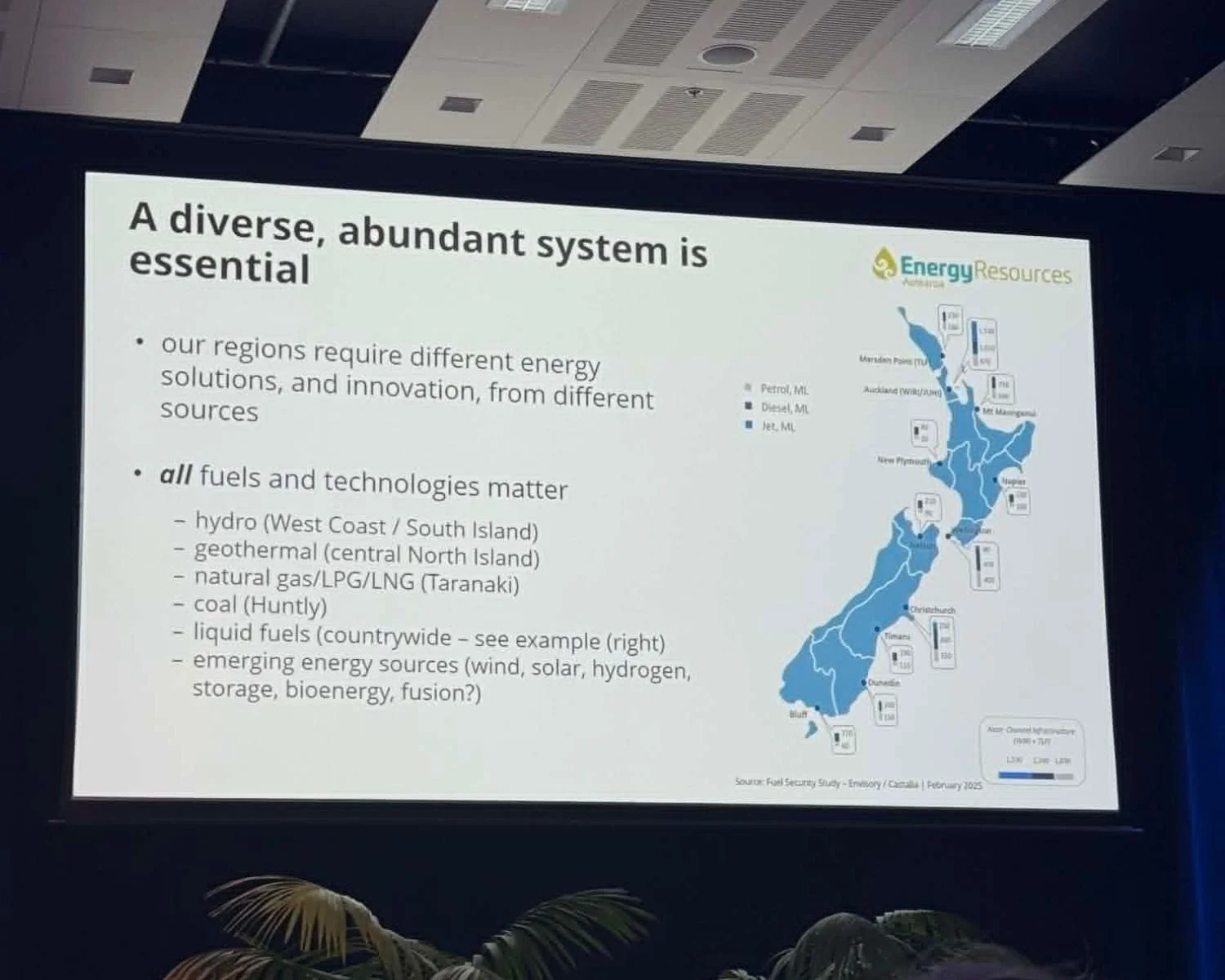
Energy Resources Aotearoa slide from John Carnegie’s presentation at the Master Plumbers 2026 Conference. All fuels have a role to play as we transition towards a more renewable future.
It's about the right energy for the right home
Every household is different.
A busy family of six with teenagers taking long showers has very different hot water demands than a retired couple or a holiday home that's occupied only a few weeks each year.
In some homes, a hot water heat pump may offer excellent long-term savings.
In others, continuous gas hot water provides the convenience of endless hot water with lower installation costs.
For some properties, an electric cylinder remains the most practical and economical solution.
There is no universal "best" system.
The best system is the one that delivers the greatest value over its lifetime for your household.
Energy efficiency matters—whatever the energy source
One of the most important messages from the conference was that energy is becoming more expensive, regardless of where it comes from. Whether it's electricity, natural gas or LPG, using energy efficiently has never been more important.
That's why conversations are shifting away from simply asking:
"What's the cheapest system to buy?"
towards asking:
"Which system will give me the lowest total cost over the next 10–15 years?"
That's a much better question—and one we're always happy to help answer.
What about the environment?
When discussing hot water systems, we are often asked:
"What's the best option for the environment?"
It's an important question—but the answer is more complex than many people realise.
New Zealand is fortunate to generate a large proportion of its electricity from renewable sources such as hydro, geothermal and wind. As a country, we're continuing to invest heavily in renewable generation, and that's something to celebrate.
However, we're still in a period of transition for a couple of decades yet
On days when the hydro lakes are low, the wind isn't blowing or electricity demand peaks during winter, our electricity system still relies on backup generation to keep homes, hospitals and businesses running.
During the 2024 electricity shortage, coal generation increased significantly because there wasn't enough gas or renewable generation available to meet demand.
This highlights an important reality:
New Zealand doesn't currently have enough renewable electricity to replace every other energy source overnight.
That's why industry experts increasingly talk about an energy transition, rather than an immediate switch to a single fuel.
Natural gas continues to play an important role by providing reliable energy when renewable generation can't meet demand. It also supports many New Zealand industries, manufacturers and hospitals that currently have few practical alternatives.
At the same time, technologies such as hot water heat pumps, solar power and battery storage are becoming more efficient and more accessible, helping households reduce both energy use and emissions over time.
As New Zealand's energy system continues to evolve, every energy source has an important role to play. The goal isn't simply to use more electricity or less gas—it's to use the right energy, in the right place, as efficiently as possible, while supporting the country's transition to a lower-emissions future.
Comparing more than the purchase price
For example, you might compare:
Electric Hot Water Cylinder
Lower purchase price between $3,500 - $4,500 + gst
Familiar technology
Reliable
Running costs depend on electricity prices
Continuous Gas Hot Water
New Supply + Install between $4,000 - $5,000 + gst
(existing units can be upgraded out for about half that)Endless hot water
Excellent for larger families
Compact installation
Running costs depend on gas usage and local supply
Hot Water Heat Pump
Higher upfront investment. Usually between $10,000 - $12,000 + gst depending on site
Very energy efficient - could cut energy usage by up to 70%
Lower running costs for many households
Best suited where installation conditions are appropriate
None of these options is automatically "better."
The best choice depends on your household and how you use hot water every day.
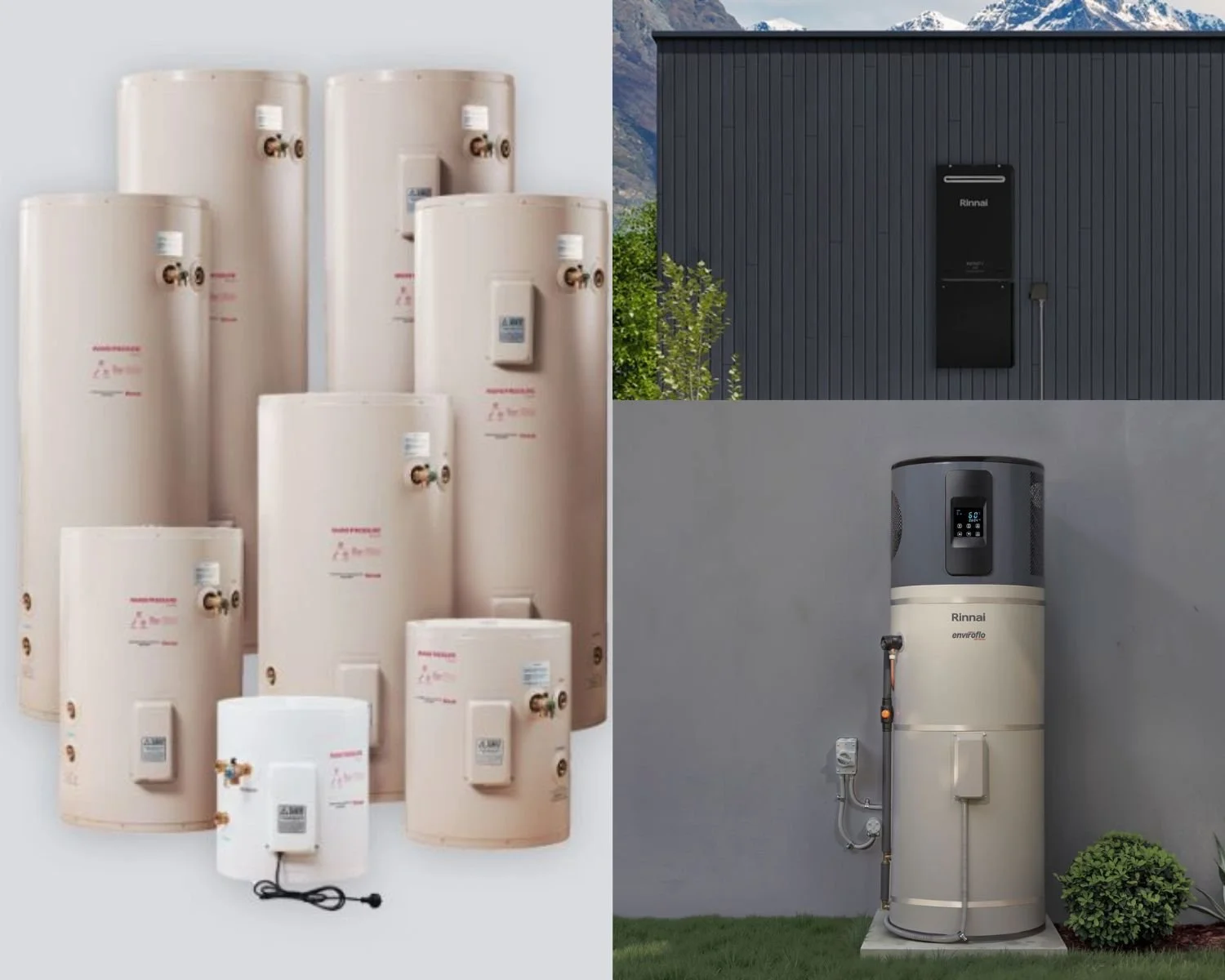
Rinnai NZ range of Hot Water Cylinders, the new Graphite EF26 Infinity and The Rinnai Enviroflo™ GR Series Integrated Heat Pumps are your reliable choice for efficient hot water, cutting energy usage by up to 70%*.
Which is cheaper to run?
Wholesale electricity prices approximately doubled between 2014–2018 and 2018–2022.
Wholesale gas prices have also roughly doubled since 2018.
Energy, regardless of where it comes from, is more expensive...
That's why today's conversations are shifting away from asking "Which fuel is cheapest?" and towards "Which system will cost me the least to own over the next 10–15 years?
The answer for your situation will depend on;
household size
hot water usage
local electricity prices
gas connection charges
LPG vs natural gas
appliance efficiency
initial upfront costs invoved in energy changeover - compared to savings made on running costs
Independent advice makes better decisions
At Jarvis Plumbing, we don't believe in recommending the same system for every customer.
Instead, we take the time to understand:
your home
your family
your current hot water use
your budget
your long-term plans
Our goal isn't simply to install a new hot water system.
It's to help you choose one that's right for your home both today and well into the future.
Let us help you choose the right hot water system
Whether you're considering an electric hot water cylinder, continuous gas hot water or a hot water heat pump, our experienced team can explain the pros and cons of each option based on your home and your family's needs.
"Our job isn't to tell customers which fuel to choose. Our job is to help them choose the right energy solution for their home today, while keeping an eye on where New Zealand's energy future is heading."
Contact Jarvis Plumbing todayfor honest, independent advice and a no-obligation quote.

The Jarvis Plumbing team - Your Hot Water Heating specialists!